How to Secure SaaS with Lorikeet's Runtime Checks
The Cloud Collective
March 10, 2026
Runtime Reality Check for AI-Native Teams: What Lorikeet’s Flowtriq Case Reveals
Stat hook: After a Claude-driven audit closed code-level XSS, SQLi, template injection, and weak crypto, Lorikeet’s manual pentest still uncovered five additional issues—two High, one Medium, and two Low—spanning session management, TLS posture, file-system hygiene, and reverse-proxy headers (Flowtriq case study: https://lorikeetsecurity.com/blog/flowtriq-case-study-ai-audit-pentest-gap).
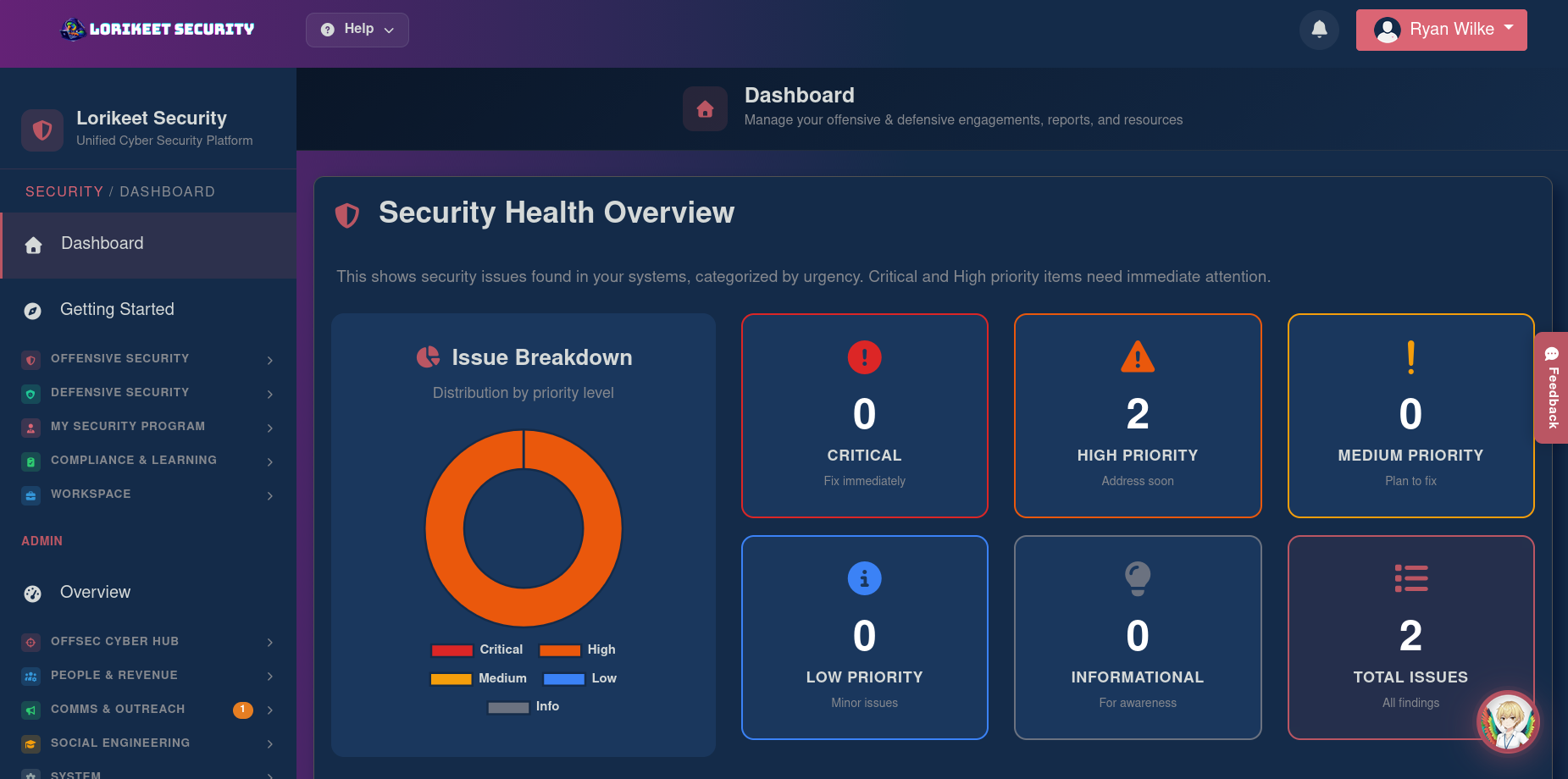
Lorikeet Security is a PTaaS (penetration testing as a service) platform and services firm built for the AI-native development era. Their core thesis matches what we’ve seen across Stack Reviews and Tool Comparisons this year: as AI-assisted code review tightens source-level defenses, residual risk shifts to runtime, infrastructure, and configuration. Lorikeet’s stack blends manual web, API, network, mobile, and cloud testing with continuous Attack Surface Management, vCISO, and SOC-as-a-Service, all delivered through a portal with live findings, real-time chat, and integrated reporting. Our team appreciated the design philosophy: keep humans in the loop where AI can’t reason about emergent behavior, and make the developer feedback loop fast enough to matter in sprint cadences.
Architecture & Design Principles
Lorikeet’s architecture centers on a multi-tenant PTaaS portal that operationalizes human-led offensive testing. From what we can infer in the case study and their service model, the system is organized around a findings pipeline rather than a monolithic “final report.” Evidence (requests/responses, screenshots, configuration diffs) is captured during testing and surfaced as live findings with severity, impacted assets, and remediation guidance. Real-time chat binds testers and developers, reducing time-to-knowledge and enabling immediate validation and retest.
Key technical decisions emphasize runtime-first coverage. Testing playbooks prioritize session boundary conditions (token rotation, cookie attributes, idle vs. absolute timeouts), transport security (cipher suites, HSTS, mTLS variants), and edge-layer correctness (X-Forwarded-* handling, Host/SNI validation). Continuous Attack Surface Management complements scheduled engagements by tracking domains, services, and TLS posture drift. Scalability is primarily human throughput plus operational repeatability: standardized methodologies, reusable checklists, and portal-driven workflows enable consistent delivery across 170+ engagements while keeping room for adversarial creativity where it counts.
Feature Breakdown
Core Capabilities
-
Manual PTaaS with live findings and chat
- Technical: Findings are streamed during the engagement—think atomic tickets with context instead of a single PDF at the end. This supports iterative retest and evidence update without waiting on a closeout.
- Use case: Flowtriq’s session management edge cases (e.g., cookie SameSite and Secure flags under OAuth redirect flow, token invalidation on concurrent logout) could be surfaced, discussed, and revalidated mid-sprint.
-
Attack Surface Management (ASM)
- Technical: Continuous enumeration of assets and services, TLS/certificate monitoring, and header posture checks on internet-facing edges to catch drift between audits.
- Use case: Reverse-proxy header misconfigurations (e.g., trusting X-Forwarded-Proto from non-authoritative sources) trend toward “it worked in staging” issues—ASM highlights changes as they happen.
-
Integrated reporting for compliance-aligned testing
- Technical: Report generation aligned to SOC 2, HIPAA, PCI-DSS, HITRUST, and FedRAMP evidence needs, with structured findings that map to control implications.
- Use case: Security and GRC teams pull a point-in-time package for auditors while engineers continue to work issues in the live stream.
Integration Ecosystem
Lorikeet’s portal-centric model is collaboration-first: live chat for testers and developers, evidence-linked findings, and integrated reporting. The case study showcases in-portal collaboration during the pentest cycle; while connectors aren’t enumerated, teams typically operationalize these platforms via exports (JSON/PDF) or APIs to feed issue trackers and SIEMs. In our team’s Integration Guides, we prioritize event-driven workflows—webhooks for new/updated findings and metadata that include environment tags (prod/stage) and asset identifiers—to drive automated triage. We’d expect Lorikeet’s implementation to support similar patterns given the real-time posture.
Security & Compliance
Lorikeet tests are compliance-aware rather than checkbox-driven: engagements are aligned to SOC 2, HIPAA, PCI-DSS, HITRUST, and FedRAMP constraints, which we’ve found essential for auditors who care about control efficacy. Enterprise readiness hinges on secure evidence handling in the PTaaS portal (encryption in transit, role-based access, retention controls) and auditable change history on findings. Our GRC-focused reviewer on the team noted the value of integrated reporting for assembling control narratives without reformatting raw artifacts.
Performance Considerations
Performance here is about time-to-signal and revalidation speed. Live findings and chat compress the loop from discovery to remediation, eliminating multi-week latency inherent in static reports. ASM mitigates configuration drift between scheduled tests, while targeted manual probes minimize noisy resource consumption on production systems. Reliability is a function of repeatable methodology plus tester depth; we liked how the case study demonstrates AI-audit-first, then human runtime validation to maximize yield per test hour.
How It Compares Technically
Against crowd-powered platforms like HackerOne and Bugcrowd, Lorikeet offers a curated, engagement-scoped model with deeper runtime and configuration coverage rather than volume-driven bounty discovery. Compared to PTaaS peers such as Cobalt and Synack, Lorikeet’s differentiation is its explicit AI-native stance: assume AI has reduced code-level classes and concentrate on emergent behavior at the edge, transport, and identity layers. Versus consulting-heavy players like NCC Group, Bishop Fox, or Trail of Bits, Lorikeet’s portalized delivery (live findings and chat) favors continuous collaboration and faster retest cycles over bespoke, point-in-time artifacts.
Developer Experience
Our engineers valued the immediacy of in-portal dialogue—asking “show me the exact header chain and proxy path” mid-engagement beats waiting for appendix pages. Integrated reporting reduces context switching for compliance teams, and the findings stream maps naturally to agile workflows. Community feedback from AI-native startups we’ve spoken with echoes this: when AI catches obvious code smells, devs need precise, reproducible runtime cases to justify backlog work, not generic CWE write-ups.
Technical Verdict
Strengths:
- Runtime-first methodology that complements AI code review
- Live findings and chat accelerate remediation and retest
- ASM closes the between-audits gap; reporting supports compliance
Limitations:
- Not a substitute for always-on bounty programs; pair with a crowdsourced layer if you need 24/7 intake
- Integration specifics (APIs/webhooks) aren’t detailed in the case study; verify to fit your tooling
Ideal use cases and Cost Analysis:
- AI-forward SaaS, healthcare, fintech, and gov teams needing compliance-aligned, practitioner-built validation
- Optimize budget by running AI audits to reduce code-level noise, then scope Lorikeet to runtime/infrastructure; you pay for expert time where it yields unique findings, improving cost-per-critical over generic scans
Your cloud stack, reviewed and ranked: Lorikeet delivers where AI can’t reason about emergent behavior. For AI-native teams, that’s the gap that matters.
Ready to Explore Lorikeet Security Case Study?
Visit the official site and see if it fits your cloud stack.
Visit Website→